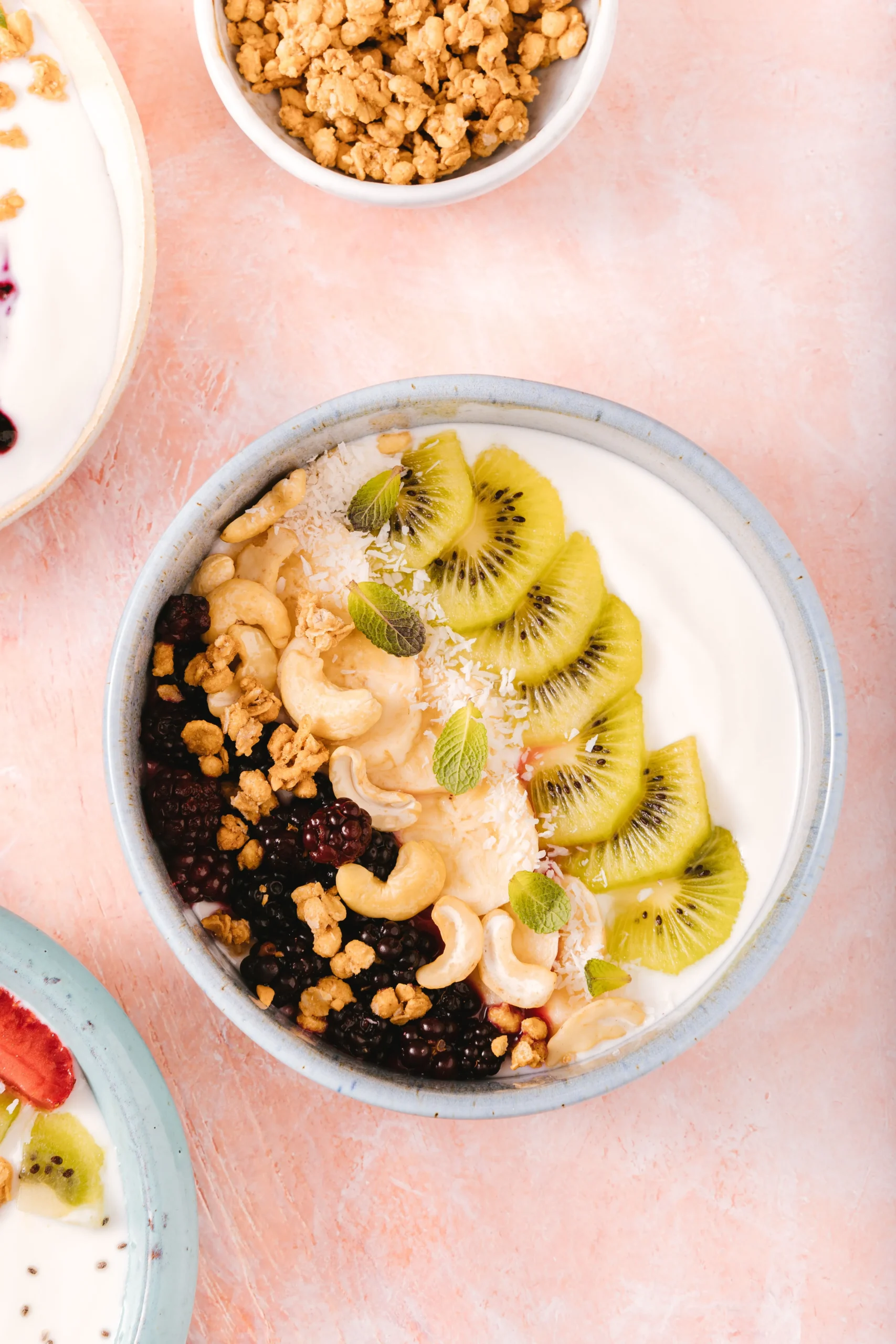
High Protein Greek Yogurt Bowl: The Perfect 5-Minute Breakfast
If you’re looking for a breakfast that keeps you full until lunch, supports muscle recovery, and takes almost no time to make, the high protein Greek yogurt bowl is one of the smartest options in your morning rotation. It’s creamy, customizable, naturally sweet, and — unlike most “healthy” breakfasts — it actually delivers on the protein numbers people care about in 2026.
This bowl has become a staple for anyone tracking macros, training regularly, or simply trying to stop the mid-morning energy crash that comes from a carb-only breakfast. Below, you’ll find the exact recipe, a full nutritional breakdown, and practical tips to make it fit your goals.
Table of Contents
Why Greek Yogurt Is the Base of Choice
Regular yogurt is strained less than Greek yogurt, which means it holds more whey and less concentrated protein. Greek yogurt goes through an extra straining process that removes much of the liquid whey, resulting in a thicker texture and roughly double the protein per serving compared to standard yogurt.
Plain, unsweetened Greek yogurt (full-fat, 2%, or non-fat, depending on your preference) is the best base because:
- It’s naturally high in protein (15–20g per 3/4 cup serving)
- It’s low in added sugar when you buy the plain version
- It contains probiotics that support gut health
- Its thick texture holds toppings well, unlike thinner yogurts
Ingredients (Serves 1)
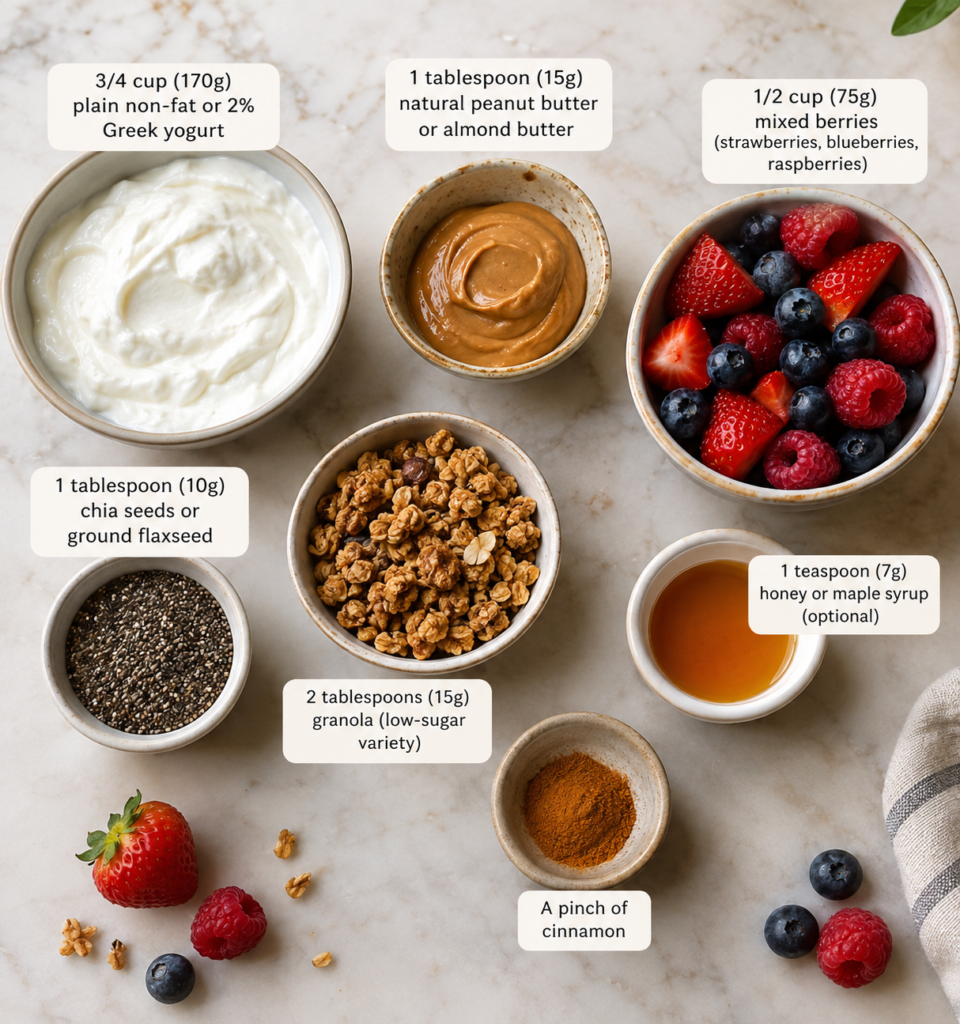
- 3/4 cup (170g) plain non-fat or 2% Greek yogurt
- 1 tablespoon (15g) natural peanut butter or almond butter
- 1/2 cup (75g) mixed berries (strawberries, blueberries, raspberries)
- 1 tablespoon (10g) chia seeds or ground flaxseed
- 2 tablespoons (15g) granola (low-sugar variety)
- 1 teaspoon (7g) honey or maple syrup (optional)
- A pinch of cinnamon
How to Make a High Protein Greek Yogurt Bowl (5 Minutes, No Cooking)
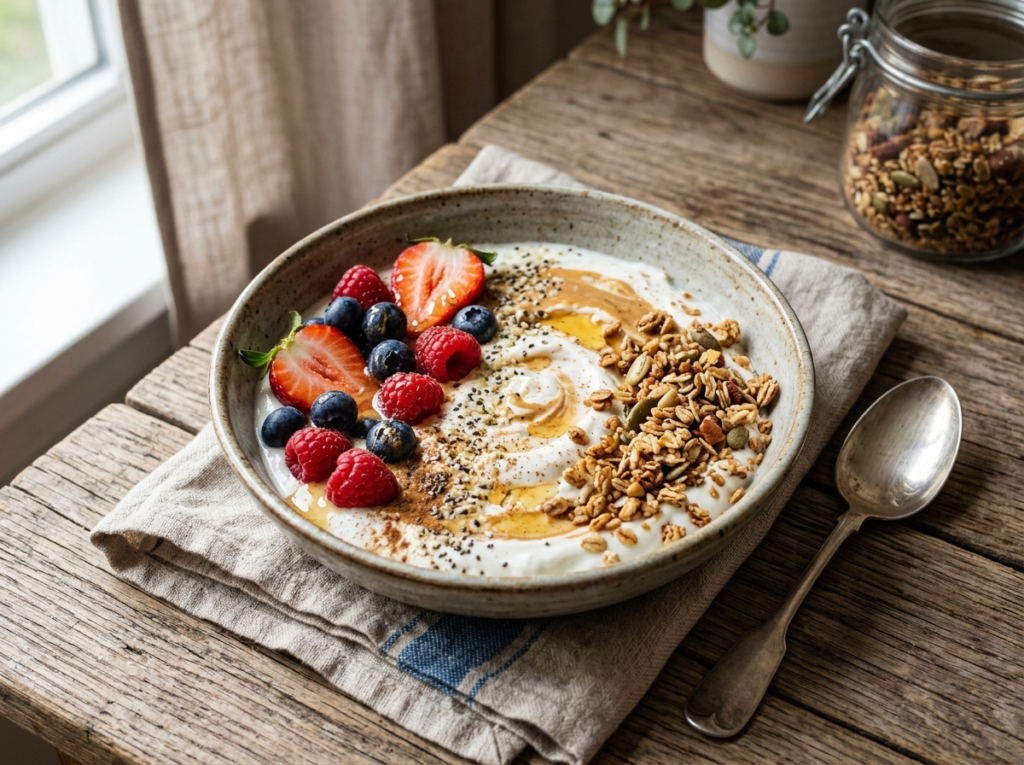
- Choose your base. Spoon the Greek yogurt into a bowl and give it a quick stir so it’s smooth and easy to layer toppings onto.
- Add the nut butter. Swirl in the peanut butter or almond butter while the yogurt is still soft — this distributes healthy fats and extra protein evenly instead of leaving one clump.
- Layer the fruit. Wash and slice the berries, then arrange them over the yogurt. Fresh or frozen (thawed) both work.
- Sprinkle the seeds. Add the chia or flax seeds for fiber and omega-3s.
- Finish with crunch. Top with granola right before eating so it stays crisp instead of going soft in the yogurt.
- Sweeten if needed. Drizzle honey or maple syrup and dust with cinnamon.
- Serve immediately for the best texture contrast between creamy yogurt and crunchy toppings.
Full Nutrition Breakdown of This High Protein Greek Yogurt Bowl (Per Serving)
| Nutrient | Amount |
|---|---|
| Calories | ~360 kcal |
| Protein | 26 g |
| Carbohydrates | 34 g |
| Fiber | 7 g |
| Sugar (natural + added) | 16 g |
| Fat | 14 g |
| Saturated Fat | 2.5 g |
Numbers will shift slightly depending on the exact yogurt brand, nut butter, and sweetener used. If you want a stricter macro target, weigh ingredients rather than using volume measurements.
Macro Breakdown at a Glance
- Protein (26g): Comes mainly from the Greek yogurt, with a smaller contribution from the nut butter and chia seeds. This is roughly 40–50% of the average person’s protein needs for a single meal.
- Carbs (34g): Mostly from the berries, granola, and honey — these are complex, fiber-paired carbs rather than refined sugar, which helps avoid an energy spike-and-crash.
- Fat (14g): Primarily unsaturated fat from the nut butter and seeds, supporting satiety and nutrient absorption.
How to Adjust the Macros
- Want more protein? Stir in a scoop of unflavored or vanilla whey/casein protein powder, or add a tablespoon of collagen peptides — this can push protein past 35g without changing the flavor much.
- Cutting carbs? Swap granola for a small handful of chopped almonds or walnuts and skip the honey.
- Need more calories (bulking)? Use full-fat Greek yogurt, double the nut butter, and add a sliced banana.
- Dairy-free? Use a high-protein plant-based yogurt (soy-based options typically have the closest protein profile to Greek yogurt).
Meal Prep Tips
This bowl is best assembled fresh, but you can prep components ahead of time to save mornings:
- Portion the Greek yogurt into containers for the week
- Pre-wash and store berries separately so they don’t get soggy
- Keep granola in a separate small bag or jar and add it right before eating
More Breakfast Ideas on ForkStories
If you liked this recipe, you’ll probably enjoy exploring more of our high-protein and quick-prep breakfast collection over on ForkStories — we regularly publish new evergreen recipes designed around real macros, not just “healthy-sounding” ingredients. Check out our breakfast recipes category for more ideas you can rotate through your week, and browse our full recipe index if you’re building out a meal plan.
Frequently Asked Questions
Is Greek yogurt good for weight loss? Because it’s high in protein and relatively low in calories per gram, Greek yogurt tends to be satiating, which can help reduce overall calorie intake when used to replace lower-protein breakfast options.
Can I make this high protein Greek yogurt bowl the night before? You can pre-portion the yogurt and fruit, but it’s best to add granola right before eating so it doesn’t lose its crunch.
What’s the best Greek yogurt brand for high protein? Look at the nutrition label rather than the brand name — protein content varies significantly even among “Greek-style” yogurts, and some are diluted with added starches. Aim for a plain variety listing at least 15g protein per 3/4 cup with minimal ingredients.