The Protein Mistake Almost Everyone Makes
When starting a health journey, the rule seems incredibly simple: eat more protein. Whether you are aiming for fat loss, muscle growth, or athletic conditioning, protein is universally celebrated as the king of macros. You diligently track your grams, scoop your powders, and fill your cart with chicken breast. Yet, weeks pass, and your progress stalls.
Why does this happen? Because there is a critical, hidden protein mistake that almost everyone makes. It is not about the total amount of protein you consume by the end of the day; it is entirely about protein distribution and timing.
Table of Contents
The Mistake: Total Daily Intake vs. Per-Meal Distribution
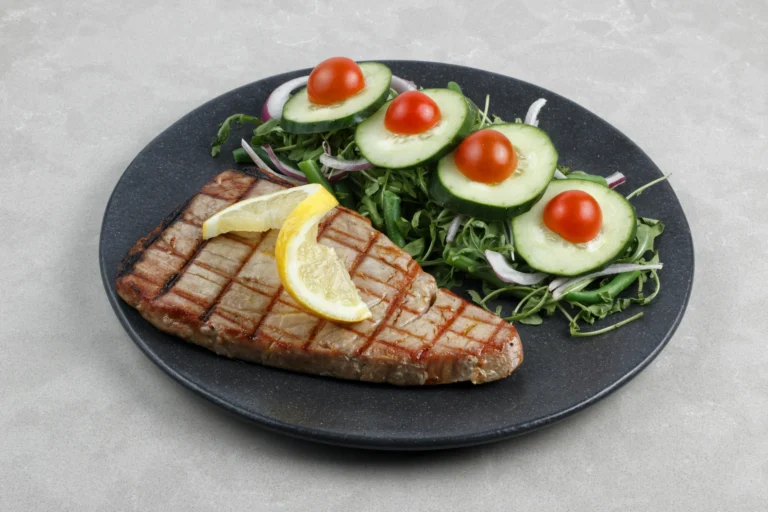
Most individuals save the vast majority of their protein for dinner. A typical day looks like a low-protein breakfast (avocado toast or oatmeal), a moderate-protein lunch (a basic salad or sandwich), and an massive, protein-heavy dinner (a large steak or multiple chicken breasts). While your tracker might show a perfect 120 grams of protein at the end of the day, your body hasn’t been able to utilize it effectively.
Your body cannot store excess protein for muscle synthesis the way it stores carbohydrates or fats. To stimulate Muscle Protein Synthesis (MPS) effectively, you need a specific threshold of leucine (an essential amino acid) per meal—typically achieved by consuming 30 to 45 grams of high-quality protein every 3 to 5 hours.
The Leucine Threshold Effect: Eating 90g of protein in a single meal doesn’t trigger three times the muscle growth of a 30g meal. The excess is simply oxidized for energy or converted to glucose, leaving your muscles starving during the morning and afternoon hours.
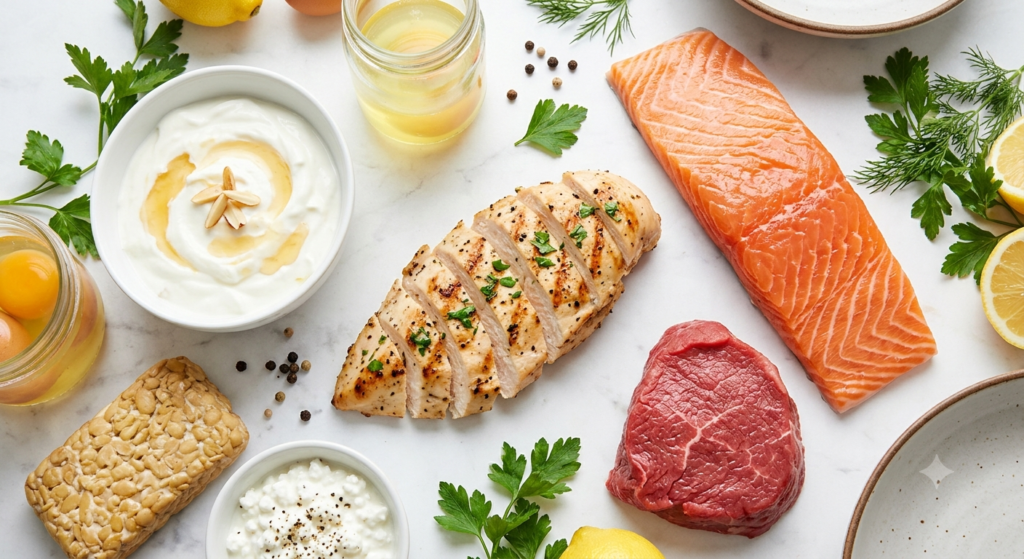
High-Protein Foods Nutritional Breakdown
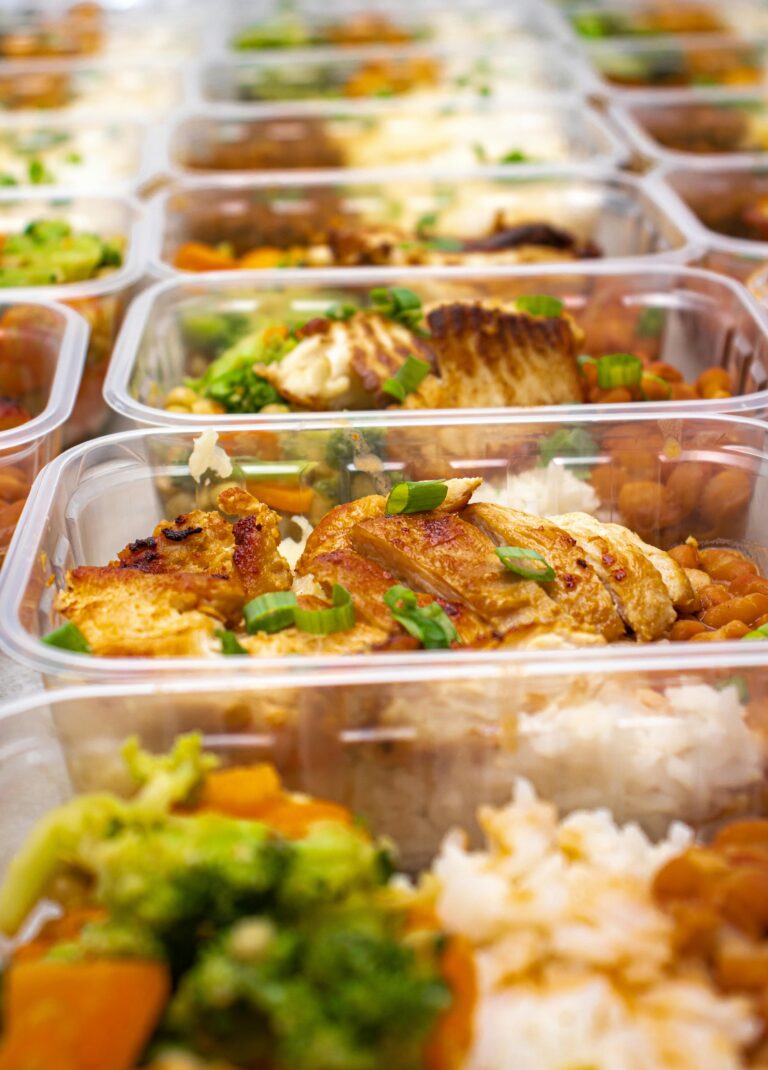
To help you structure your meals evenly throughout the day, here is a detailed breakdown of premium, clean protein sources ideal for your meal prepping strategy.
| Food Item (100g serving) | Calories (kcal) | Protein (g) | Carbohydrates (g) | Fat (g) |
|---|---|---|---|---|
| Chicken Breast (Cooked) | 165 | 31.0 | 0.0 | 3.6 |
| Atlantic Salmon (Grilled) | 206 | 22.0 | 0.0 | 12.0 |
| Lean Beef (95% lean) | 171 | 26.0 | 0.0 | 7.0 |
| Greek Yogurt (Non-Fat) | 59 | 10.3 | 3.6 | 0.4 |
| Liquid Egg Whites | 54 | 11.0 | 1.0 | 0.2 |
| Cottage Cheese (2% Fat) | 81 | 10.4 | 4.7 | 2.3 |
| Tempeh (Organic) | 192 | 20.3 | 7.6 | 10.8 |
The Balanced Solution: A Perfect High-Protein Day
To fix this common error, you should aim to distribute your macro intake evenly. Below is an optimized structural example of a high-protein day designed to maximize metabolic rate and satiety without causing digestive heaviness.
| Meal Schedule | Target Protein (g) | Target Carbs (g) | Target Fat (g) | Total Calories |
|---|---|---|---|---|
| Breakfast (8:00 AM) | 35g | 40g | 10g | 390 kcal |
| Lunch (1:00 PM) | 40g | 45g | 12g | 448 kcal |
| Mid-Day Snack (4:30 PM) | 30g | 15g | 5g | 225 kcal |
| Dinner (8:00 PM) | 45g | 35g | 14g | 446 kcal |
| Total Daily Target | 150g | 135g | 41g | 1,509 kcal |
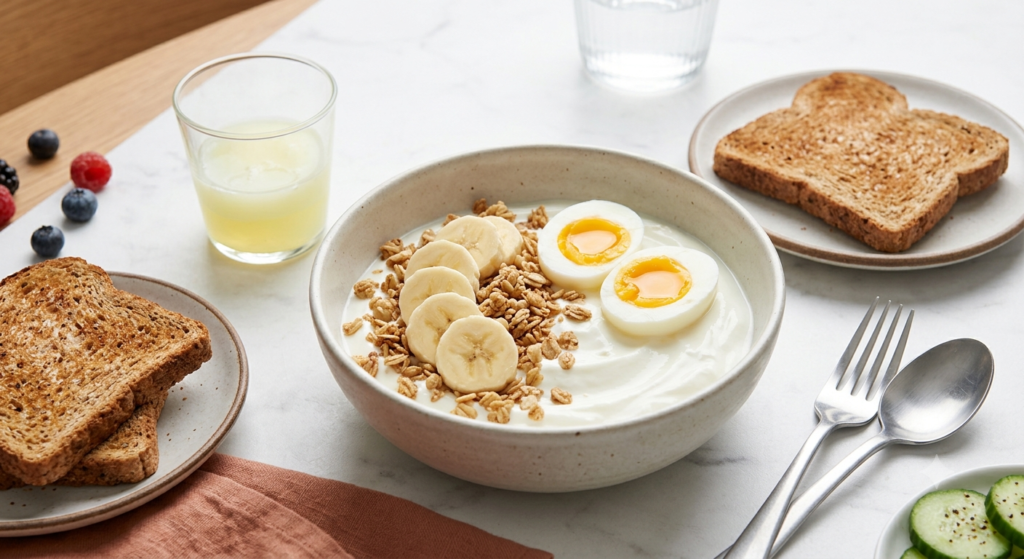
How to Correct the Mistake Instantly
- Front-load your morning: Swap standard breakfast foods for egg whites mixed with whole eggs, or an intensive Greek yogurt bowl to secure at least 30g of protein before noon.
- Keep snacks functional: Move away from fruit-only or cracker-based snacks. Introduce clean whey, casein, or bento boxes with hard-boiled eggs and turkey breast.
- Downsize your dinner proportions: If your dinner plate currently features a massive protein portion, cut it back slightly and relocate those macro assets to your breakfast or mid-day periods.
Frequently Asked Questions (FAQ)
1. Can the body absorb more than 30 grams of protein in one sitting?
Yes, your body can absorb almost all the protein you eat for general tissue repair and metabolic functions. However, for triggering optimal Muscle Protein Synthesis (MPS), the muscle tissues hit a saturation point around 30 to 45 grams per meal. Any amount significantly over that is burned as energy or stored, rather than building new muscle tissue.
2. How do I know if I am making this protein mistake?
If you constantly feel fatigued in the afternoons, experience intense sugar cravings, or find that despite hitting your daily macro targets you aren’t retaining lean mass while leaning out, you are likely skewing your distribution too heavily toward one meal.
3. Does timing matter for plant-based proteins?
Absolutely. Because plant proteins are typically lower in essential amino acids like leucine, timing and source combination are even more critical. Plant-based athletes should strive for 35-40g per meal to ensure the leucine threshold is successfully reached.
Did You Enjoy Our Recipes?